Do not block the native-module queue while a Zano wallet catches up - #17
Do not block the native-module queue while a Zano wallet catches up#17j0ntz wants to merge 3 commits into
Conversation


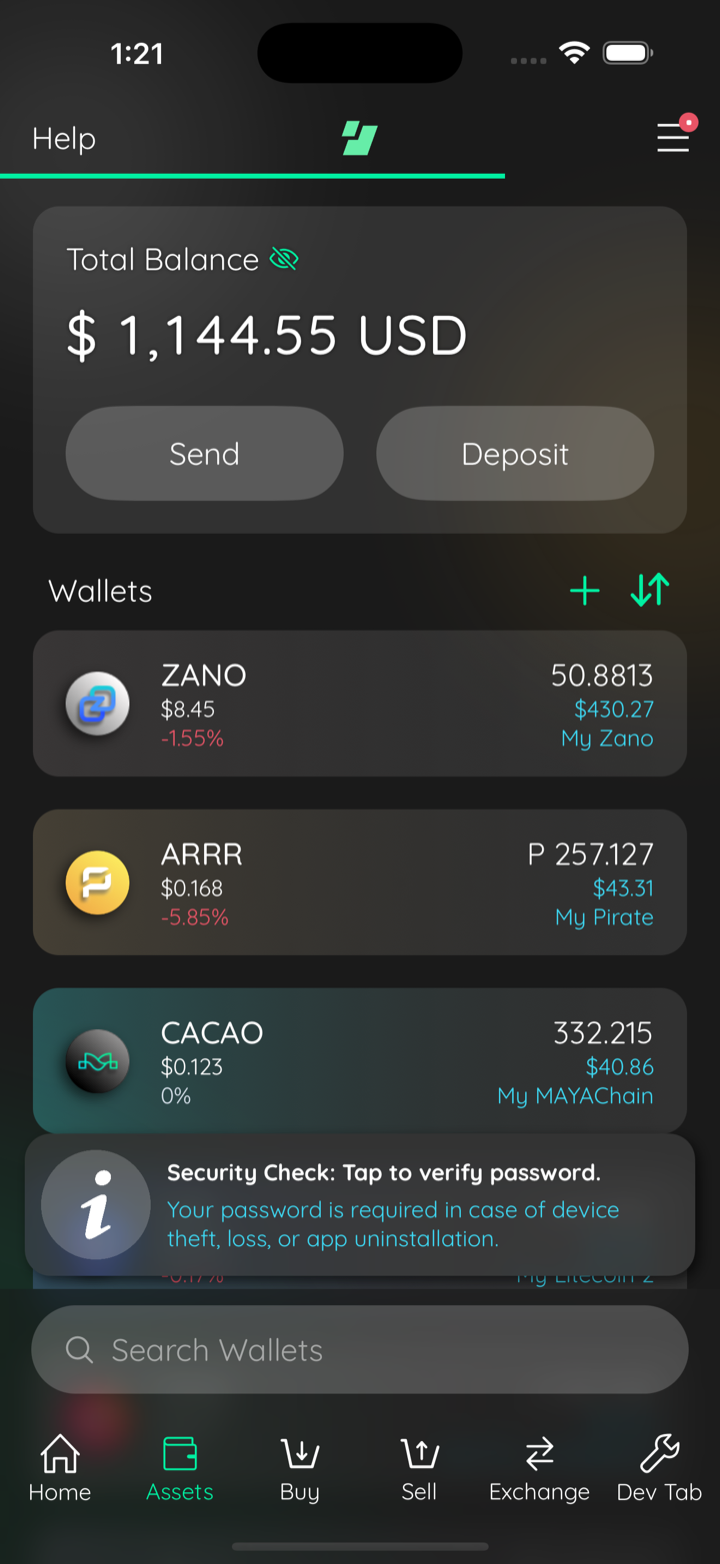
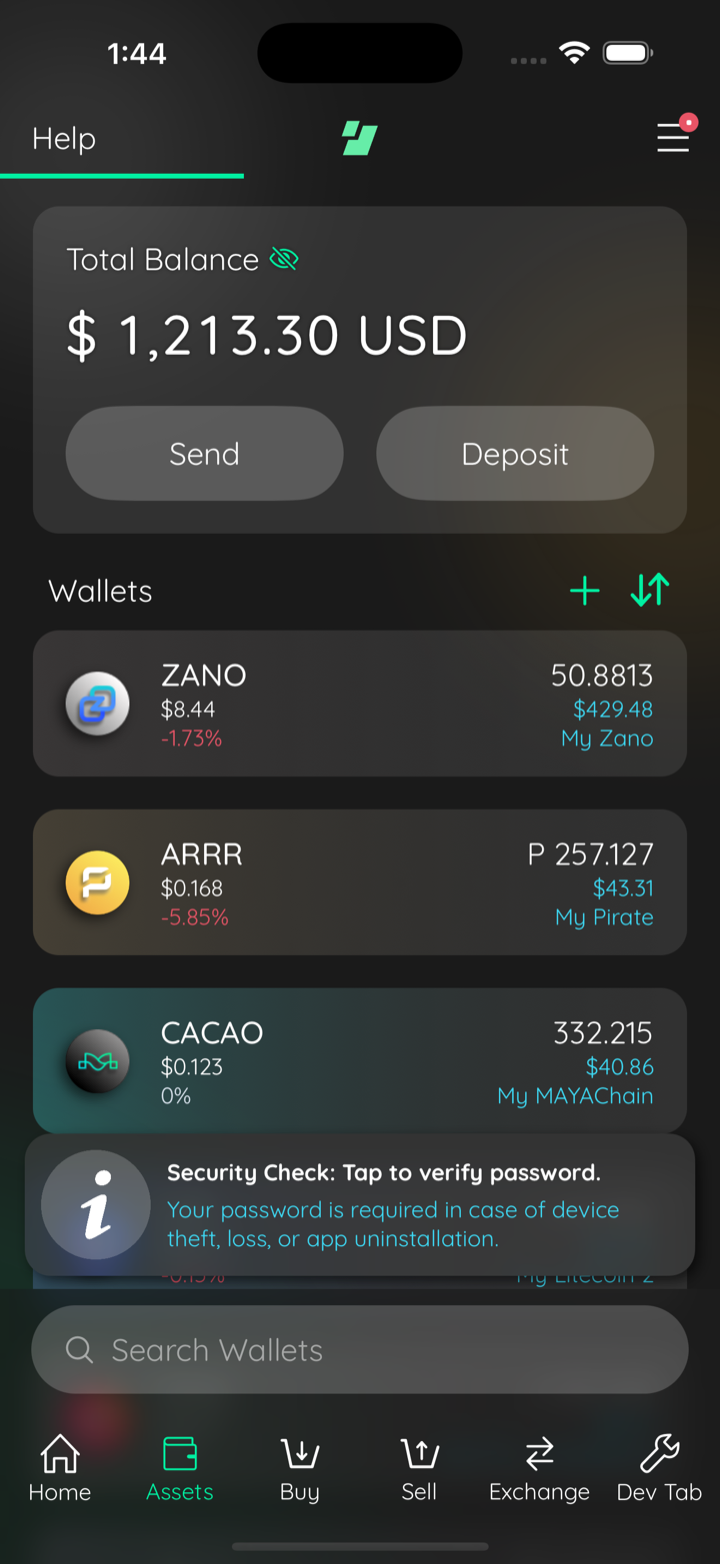
📸 Test evidenceui during zano scan
after fix relaunch
Captured by the agent's in-app test run (build-and-test). |

84e93c8 to
18302e1
Compare
![cursor[bot]](https://avatars.githubusercontent.com/in/1210556?s=60&v=4)

There was a problem hiding this comment.
Cursor Bugbot has reviewed your changes using high effort and found 1 potential issue.

❌ Bugbot Autofix is OFF. To automatically fix reported issues with cloud agents, enable autofix in the Cursor dashboard.
Reviewed by Cursor Bugbot for commit 18302e1. Configure here.

This comment was marked as outdated.
This comment was marked as outdated.
Sorry, something went wrong.
This comment was marked as outdated.
This comment was marked as outdated.
Sorry, something went wrong.
 paullinator
left a comment
paullinator
left a comment
paullinator
left a comment
There was a problem hiding this comment.
Moving the generateSeedPhrase / postponed-run warning onto configurePostponedRun in startWallet (GitHub will not attach a comment to generateSeedPhrase itself because that method is unchanged in this diff).
Additional Findings
- warning
git:1: All four PR commits exceed the 50-character subject limit (worst is 61: “Open wallets with the refresh worker postponed in startWallet”). Subjects are otherwise imperative and capitalized.- Rewrite subjects to ≤50 characters, e.g. “Postpone refresh worker in startWallet”, “Add migration scheduling design doc”.
d5b4755 to
b9a68a2
Compare

Bugbot is paused — on-demand spend limit reachedBugbot uses usage-based billing for this team and has hit its on-demand spend limit. A team admin can raise the spend limit in the Cursor dashboard, or wait for the next billing cycle to continue. |
b9a68a2 to
f3d11d0
Compare
|
Commit subjects are now within 50 characters, and the branch is the two commits you asked for:
Also folded in from the earlier review, since they were still live in the code:
Not done here, with reasons: the |
f3d11d0 to
8a13dae
Compare
|
Correcting my previous reply: two of the three things I deferred there did not deserve deferring, and one misread what you asked. All three are handled now.
|
Bugbot is paused — on-demand spend limit reachedBugbot uses usage-based billing for this team and has hit its on-demand spend limit. A team admin can raise the spend limit in the Cursor dashboard, or wait for the next billing cycle to continue. |
|
Additional in-app evidence from today's run (iOS sim, edge-funds, two Zano wallets), which also shows the user-visible shape of the stall: Before (published react-native-zano 0.4.0 installed): the Send scene could not even accept a recipient address. After (this branch linked, plus edge-currency-accountbased#1090): the same drive resolved the address immediately, the wallet finished its catch-up scan (blocks 3,528,465 to 3,826,151), and a 0.063 ZANO send between the two wallets completed to the success scene. So the queue starvation this PR fixes was not only a slowdown, it made address entry and sending unusable while any Zano wallet was behind. |

The 0.4.0 re-key migration ran resetWalletPassword against a wallet whose
refresh worker had already taken the per-wallet lock for its entire first
catch-up scan, so the call blocked for the whole scan (minutes to hours)
while sitting on React Native's shared native-module dispatch queue. On
iOS every native-module call in the app queued behind it, which presented
as a severe app-wide performance drop whenever a Zano wallet was behind
on blocks.

Configure the native library's postponed_run_wallet mode before the
migration's opens, so no probe or migration open starts a refresh, and
start the worker explicitly for the one wallet startWallet returns. Both
methods already exist in the shipped native dispatch, so this is a
JS-only change.

Creating a wallet took the same shape: generateSeedPhrase opened its
temporary wallet without postponing the worker, so the closeWallet that
follows waited on the per-wallet lock. Configure postponed-run there
too, and treat a non-OK close as a failure rather than deleting a file
this process still holds open.

Also fixes transfer sending an empty payment_id for an integrated
address when the caller passed none, and bumps the package to 0.4.1.
Covers the investigation evidence, the postponed-run design across this
repo and edge-currency-accountbased, and the post-implementation
retrospective.

Covers the phase history through the Android validation-build fix, the
QA verification, and the create-wallet instance of the same stall.
c93048f to
3b67325
Compare

|
Closing in favour of #18, which supersedes this. That branch carries the postponed-run scheduling forward, including the The design doc that lived on this branch is now #19, updated to describe the shipping implementation rather than this one, so the links to it from the task and the run reports keep resolving once that merges. |
Opening a wallet auto-starts its native refresh worker, and the worker
holds the per-wallet recursive mutex for the entire first catch-up scan
(plain_wallet_api.cpp:508 auto-runs on open; worker_func holds the
locked_object proxy across refresh()). The 0.4.0 re-key migration's
resetWalletPassword takes that same mutex, so on a wallet weeks behind it
blocked for the whole scan while sitting on React Native's shared
native-module dispatch queue -- every native call in the app queued behind
it, and the app usually died before the migration finished, so the file
was never re-keyed and every launch repeated the block.

startWallet now configures the native library's postponed_run_wallet mode
before its first open, so no probe or migration open starts a worker, and
starts the worker explicitly for exactly the wallet it returns. Every
throw path leaves either nothing open, or a wallet that reaches its next
caller as ALREADY_EXISTS -- and under postponed mode an adopted wallet is
not running, so the adopter owns issuing run_wallet for it, which
edge-currency-accountbased's adoption path does. The flag is process-wide
and sticky; the raw open/restore/generate docs carry the caveat, and any
open made after this must be followed by run_wallet once the wallet
should sync.

generateSeedPhrase had the same shape: its temporary wallet opened with
the worker auto-running, so the closeWallet that follows waited on the
same lock. It postpones too, and a close that does not report OK now
fails the call rather than deleting a file this process still holds open.

Both native methods (configure, run_wallet) exist in the shipped 0.4.0
dispatch, so this is JS-only, and runWallet treats the one bare-string
native failure answer as a failure report rather than a parse surprise.
The fake models the postponed-run contract (runningWallets, an
open-wallet table tests can clear to simulate the process dying), and
every startWallet success path asserts exactly-the-returned-wallet-
running -- verified by mutation: dropping any started() call now fails
the suite.

Ported from #17.

Co-authored-by: Jonathan Tzeng <jnthntzng@gmail.com>
`prepareZanoDirectory` failures were log-and-continue: if the `wallets`
directory could not be created or could not be marked excluded from
device backups, the module still handed out `documentDirectory` and the
SDK went on to write the seed and spend keys into a directory an
unencrypted Finder backup would capture -- the exact exposure the 0.4.0
backup exclusion exists to close. A nil documents directory was worse:
`[docsDir path]` fed nil into an NSDictionary literal, which throws at
module init.

The module now withholds `documentDirectory` when `wallets` cannot be
prepared, and the `CppBridge` constructor turns that into a hard failure
with a clear message, so Zano is disabled for the session rather than
silently unprotected. `NativeZanoModule.documentDirectory` becomes
optional to match the contract this creates, the bridge keeps a
guard-validated copy for its own paths, and a test pins the refusal for
both the missing and the empty value. `logs` and `app_config` carry no
key material, so their preparation stays best-effort.

This trades availability for key protection: a transient exclusion
failure now disables Zano until the next launch instead of degrading
silently. Deliberate, and worth revisiting only if such failures show up
in the field.

Ported from #17.

Co-authored-by: Jonathan Tzeng <jnthntzng@gmail.com>
Replaces the hand-rolled hex encoder in `deriveWalletFilePassword` with
`base16.stringify(...).toLowerCase()` from rfc4648, which is the encoding
library the rest of the stack standardizes on. Output is byte-identical
for every input -- both produce the lowercase hex of the same 16 digest
bytes -- and the unchanged golden-vector test enforces that: any drift
here would orphan every wallet file the 0.4.0 migration re-keyed.

Strictly cosmetic; no changelog entry. The `utf8Bytes` docstring also
grows a paragraph on why the encoder avoids host globals. rfc4648 joins dependencies and the
lockfile is regenerated with it, so `npm ci` stays reproducible.

Ported from #17.

Co-authored-by: Jonathan Tzeng <jnthntzng@gmail.com>
Zano HF6 moved payment ids into the transaction outputs: each integrated
destination's embedded id is attached natively, one per output, and the
wallet RPC rejects any non-empty request-level `payment_id` outright
(WALLET_RPC_ERROR_CODE_WRONG_PAYMENT_ID, "tx-wide payment id you provided
is now deprecated"). The shipped 0.4.0 SDK enforces this whether or not
the fork has activated.

The one real defect was forwarding: a caller-supplied `opts.paymentId`
went out on the wire and the node refused the send with the deprecation
error. The per-destination validation loop next to it, meanwhile, was
inert: it gated on `addressInfo.is_integrated`, a field the native
`get_address_info` has never returned -- the real response carries
`payment_id` only as a boolean presence flag (plain_wallet_api.cpp:484,
"lazy to make struct for it") -- so the loop never resolved an id, never
threw its one-id-per-transaction error, and only cost a native round-trip
per recipient on every send.

There is no longer anything a request-level id can express, so the option
is removed rather than kept as decoration: the field is always sent
empty, and a caller holding a separate payment id folds it into an
integrated destination address before calling -- which is what
edge-currency-accountbased now does on the user's behalf, offline via
zano-utils-js. The dead loop goes with it, along with the fictional
`is_integrated`/string-`payment_id` declarations in `AddressInfo` and the
test fake, which now match the real native shape.

The fake also models the transfer path (`asyncCall`/`tryPullResult`,
`invoke`), which is the gap that let the forwarding go untested: tests
pin that nothing non-empty ever reaches the wire, that multi-destination
sends pass, and that the send path makes no address lookups.

Replaces the `payment_id: paymentId ?? ''` change proposed in
#17 -- which was itself a no-op, since the loop
feeding `paymentId` never assigned it -- with the removal the HF6
contract actually calls for.

References:
- Zano HF6 migration guide, "What is intrinsic payment id":
  https://docs.zano.org/docs/build/exchange-guidelines/HF6-migration-guide/
- wallet_rpc_server.cpp on_transfer (rejection at the pinned SDK)
Opening a wallet auto-starts its native refresh worker, and the worker
holds the per-wallet recursive mutex for the entire first catch-up scan
(plain_wallet_api.cpp:508 auto-runs on open; worker_func holds the
locked_object proxy across refresh()). The 0.4.0 re-key migration's
resetWalletPassword takes that same mutex, so on a wallet weeks behind it
blocked for the whole scan while sitting on React Native's shared
native-module dispatch queue -- every native call in the app queued behind
it, and the app usually died before the migration finished, so the file
was never re-keyed and every launch repeated the block.

startWallet now configures the native library's postponed_run_wallet mode
before its first open, so no probe or migration open starts a worker, and
starts the worker explicitly for exactly the wallet it returns. Every
throw path leaves either nothing open, or a wallet that reaches its next
caller as ALREADY_EXISTS -- and under postponed mode an adopted wallet is
not running, so the adopter owns issuing run_wallet for it, which
edge-currency-accountbased's adoption path does. The flag is process-wide
and sticky; the raw open/restore/generate docs carry the caveat, and any
open made after this must be followed by run_wallet once the wallet
should sync.

generateSeedPhrase had the same shape: its temporary wallet opened with
the worker auto-running, so the closeWallet that follows waited on the
same lock. It postpones too, and a close that does not report OK now
fails the call rather than deleting a file this process still holds open.

Both native methods (configure, run_wallet) exist in the shipped 0.4.0
dispatch, so this is JS-only, and runWallet treats the one bare-string
native failure answer as a failure report rather than a parse surprise.
The fake models the postponed-run contract (runningWallets, an
open-wallet table tests can clear to simulate the process dying), and
every startWallet success path asserts exactly-the-returned-wallet-
running -- verified by mutation: dropping any started() call now fails
the suite.

Ported from #17.

Co-authored-by: Jonathan Tzeng <jnthntzng@gmail.com>
`prepareZanoDirectory` failures were log-and-continue: if the `wallets`
directory could not be created or could not be marked excluded from
device backups, the module still handed out `documentDirectory` and the
SDK went on to write the seed and spend keys into a directory an
unencrypted Finder backup would capture -- the exact exposure the 0.4.0
backup exclusion exists to close. A nil documents directory was worse:
`[docsDir path]` fed nil into an NSDictionary literal, which throws at
module init.

The module now withholds `documentDirectory` when `wallets` cannot be
prepared, and the `CppBridge` constructor turns that into a hard failure
with a clear message, so Zano is disabled for the session rather than
silently unprotected. `NativeZanoModule.documentDirectory` becomes
optional to match the contract this creates, the bridge keeps a
guard-validated copy for its own paths, and a test pins the refusal for
both the missing and the empty value. `logs` and `app_config` carry no
key material, so their preparation stays best-effort.

This trades availability for key protection: a transient exclusion
failure now disables Zano until the next launch instead of degrading
silently. Deliberate, and worth revisiting only if such failures show up
in the field.

Ported from #17.

Co-authored-by: Jonathan Tzeng <jnthntzng@gmail.com>
Replaces the hand-rolled hex encoder in `deriveWalletFilePassword` with
`base16.stringify(...).toLowerCase()` from rfc4648, which is the encoding
library the rest of the stack standardizes on. Output is byte-identical
for every input -- both produce the lowercase hex of the same 16 digest
bytes -- and the unchanged golden-vector test enforces that: any drift
here would orphan every wallet file the 0.4.0 migration re-keyed.

Strictly cosmetic; no changelog entry. The `utf8Bytes` docstring also
grows a paragraph on why the encoder avoids host globals. rfc4648 joins dependencies and the
lockfile is regenerated with it, so `npm ci` stays reproducible.

Ported from #17.

Co-authored-by: Jonathan Tzeng <jnthntzng@gmail.com>
Zano HF6 moved payment ids into the transaction outputs: each integrated
destination's embedded id is attached natively, one per output, and the
wallet RPC rejects any non-empty request-level `payment_id` outright
(WALLET_RPC_ERROR_CODE_WRONG_PAYMENT_ID, "tx-wide payment id you provided
is now deprecated"). The shipped 0.4.0 SDK enforces this whether or not
the fork has activated.

The one real defect was forwarding: a caller-supplied `opts.paymentId`
went out on the wire and the node refused the send with the deprecation
error. The per-destination validation loop next to it, meanwhile, was
inert: it gated on `addressInfo.is_integrated`, a field the native
`get_address_info` has never returned -- the real response carries
`payment_id` only as a boolean presence flag (plain_wallet_api.cpp:484,
"lazy to make struct for it") -- so the loop never resolved an id, never
threw its one-id-per-transaction error, and only cost a native round-trip
per recipient on every send.

There is no longer anything a request-level id can express, so the option
is removed rather than kept as decoration: the field is always sent
empty, and a caller holding a separate payment id folds it into an
integrated destination address before calling -- which is what
edge-currency-accountbased now does on the user's behalf, offline via
zano-utils-js. The dead loop goes with it, along with the fictional
`is_integrated`/string-`payment_id` declarations in `AddressInfo` and the
test fake, which now match the real native shape.

The fake also models the transfer path (`asyncCall`/`tryPullResult`,
`invoke`), which is the gap that let the forwarding go untested: tests
pin that nothing non-empty ever reaches the wire, that multi-destination
sends pass, and that the send path makes no address lookups.

Replaces the `payment_id: paymentId ?? ''` change proposed in
#17 -- which was itself a no-op, since the loop
feeding `paymentId` never assigned it -- with the removal the HF6
contract actually calls for.

References:
- Zano HF6 migration guide, "What is intrinsic payment id":
  https://docs.zano.org/docs/build/exchange-guidelines/HF6-migration-guide/
- wallet_rpc_server.cpp on_transfer (rejection at the pinned SDK)
2 participants


Technical Design Document
zano-migration-off-module-queue.md
Description
QA reported severe app-wide iOS slowdowns after edge-react-gui upgraded to react-native-zano 0.4.0 (task: https://app.asana.com/0/1215088146871429/1217559756673909).
Root cause, captured live with a thread sample on the sim:
startWallet's wallet-file re-key migration opens the wallet with the legacy password, and that open auto-starts the native refresh worker, which takes the per-wallet recursive mutex for the entire first catch-up scan. The migration's next step,resetWalletPassword, blocks on that mutex until the scan finishes (minutes for a wallet weeks behind, hours for a fresh rescan) while sitting on React Native's shared native-module dispatch queue. Every native-module call in the app queues behind it, which presents as a severe app-wide performance drop. The app usually dies before the migration completes, so the file is never re-keyed and every launch repeats the same blocked migration. 0.3.0 had no re-key step, which is why the regression tracks the 0.4.0 upgrade.The fix is scheduling only, and JS-only: configure the native library's
postponed_run_walletmode before the migration's opens, so no probe or migration open starts a refresh worker, and start the worker explicitly (run_wallet, idempotent) for the one walletstartWalletreturns. Both methods already exist in the shipped native dispatch. The migration's correctness rules (legacy password order, rebuild guards, passphrase handling) are untouched.Verified on the iOS sim against an account with three Zano wallets that were weeks behind:
resetWalletPasswordobserved blocked on the wallet mutex for 15+ minutes oncom.meta.react.turbomodulemanager.queue; a probe pollinggetOpenedWalletsstarved the whole time; wallet files never re-keyed across many launches.Testing
npm test(34 passing, including new coverage: the migration call sequence now postpones the worker and runs only the returned wallet; every terminal path leaves exactly the returned wallet running)npx tsc --noEmit,verify-repo.shcleanNote
Medium Risk
Touches wallet open/migration scheduling and process-wide postponed-run mode; behavior is well-tested but incorrect
run_wallettiming could leave wallets not syncing until callers adopt/run them.Overview
Fixes app-wide iOS slowdown after 0.4.0 by changing when the native refresh worker starts, not migration logic.
startWalletnow calls nativeconfigurewithpostponed_run_wallet: truebefore any open/restore, so probe and re-key opens do not auto-start a catch-up scan that holds the per-wallet lock. New helpersconfigurePostponedRunandrunWalletwrap those sync calls; every successful return path runsstarted(), which callsrun_walletonly for the wallet being returned.Migration rules (legacy passwords, rebuild, passphrase handling) are unchanged. Tests and the fake module track
runningWalletsto assertconfigurefirst,run_walletlast, and that only the returned wallet syncs. CHANGELOG and a design doc document the TurboModule queue / mutex interaction.Reviewed by Cursor Bugbot for commit 7e73277. Bugbot is set up for automated code reviews on this repo. Configure here.